Commercial and industrial (C&I) solar in the United States is entering a new phase. For nearly two decades, the federal Investment Tax Credit (ITC) accelerated the adoption of solar across commercial properties. As that incentive begins to phase out, many property owners and tenants are asking the same question: Does commercial solar still make financial sense?
The short answer is yes.
The underlying economics of distributed solar remain strong, particularly for commercial real estate portfolios with large rooftops and consistent daytime energy demand. Electricity prices continue to rise across many regions, and distributed energy programs such as community solar are expanding in several states.
For commercial real estate portfolios, the question is less about whether solar works and more about where and how it makes the most financial sense.
This article outlines the key trends shaping the 2027–2028 outlook for commercial and industrial solar programs, with a focus on the markets, property types, and program structures that tend to produce the strongest long-term results for commercial real estate owners.
The Post-ITC Landscape for Commercial Solar
For much of the past two decades, the Investment Tax Credit has been a major driver of solar adoption in the United States. The credit allowed solar project owners to offset a significant portion of installation costs and accelerated the deployment of renewable energy across residential and commercial markets.
However, the presence or absence of the ITC does not fundamentally change how commercial solar works.
At its core, a commercial solar program generates electricity from rooftop or parking canopy systems installed on a property. That electricity is either consumed locally or exported to the grid through programs such as community solar. The system owner receives revenue from the energy produced over the life of the project.
What the ITC did was accelerate this model by lowering the upfront capital required to build solar systems.
As the market moves toward 2027 and beyond, two shifts are shaping the industry:
- Projects that secured the ITC through safe harbor provisions will continue coming online through the late 2020s.
- Market economics, rather than incentives, will increasingly determine where solar is deployed.
This transition reflects the maturation of the solar industry. According to the U.S. Department of Energy, the cost of solar power has declined significantly over the past decade, making distributed generation economically viable in many regions even without major subsidies.
For commercial property owners evaluating solar today, the focus is shifting away from short-term incentives and toward long-term operating performance. That shift places greater importance on solar partners that understand commercial real estate portfolios, tenant energy dynamics, and the operational realities of multi-tenant properties.
Why Commercial Solar Still Makes Financial Sense
Despite changes to federal incentives, commercial solar continues to make financial sense in many situations.
Several long-term trends support the economics of distributed solar for commercial properties.
Rising Electricity Costs
Electricity prices have steadily increased across many U.S. markets. According to the U.S. Energy Information Administration, commercial electricity rates have risen across numerous states over the past decade.
For tenants operating retail locations, restaurants, or service businesses, electricity is a recurring operational expense. Even modest reductions in energy costs can materially impact margins across large portfolios.
Solar programs allow properties to generate electricity locally, often at a predictable cost structure over the long term.
Underutilized Rooftop Infrastructure
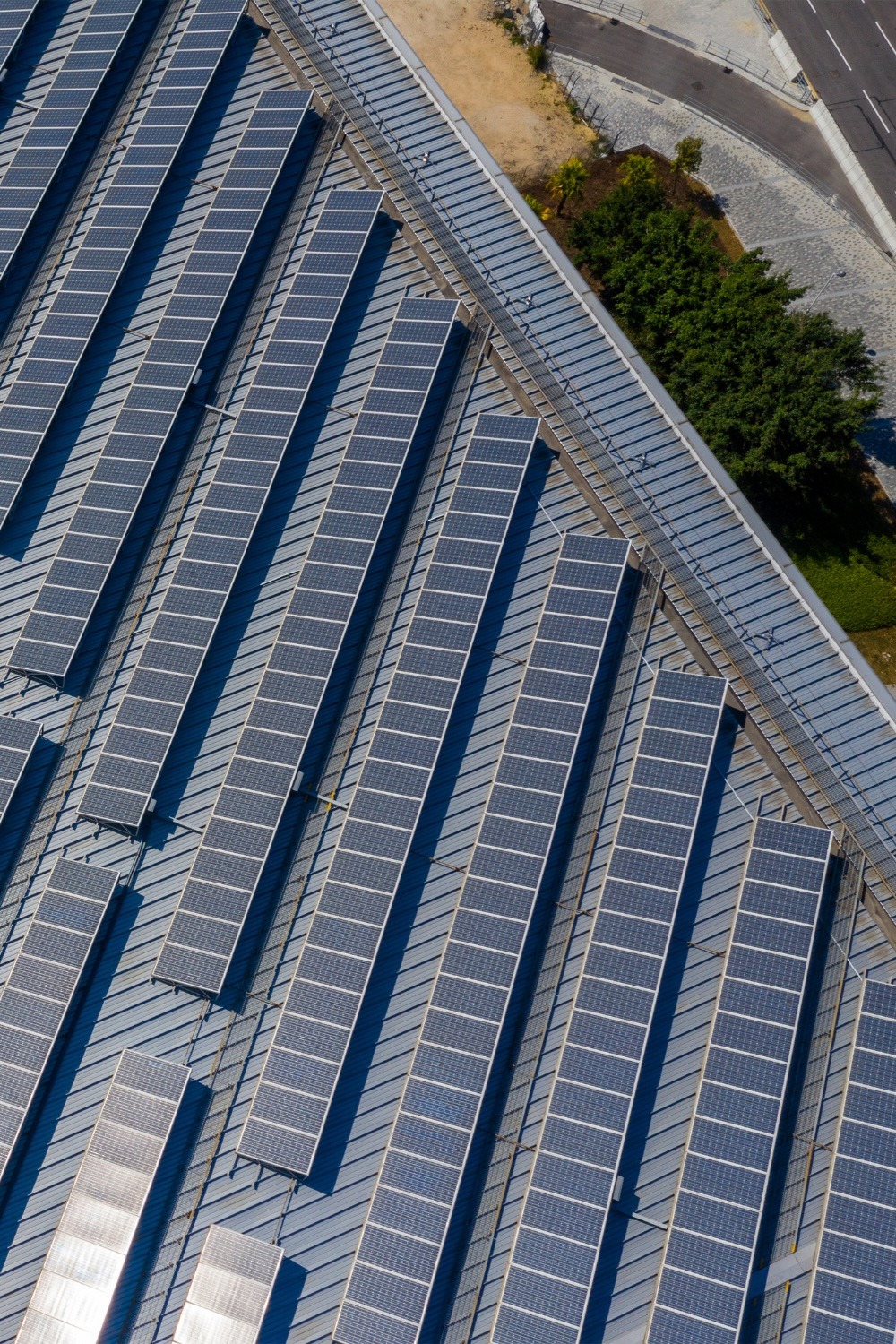
Commercial rooftops represent a largely underutilized asset. Shopping centers, industrial buildings, and large retail properties often have tens of thousands of square feet of roof area that currently generate no revenue.
Solar systems allow property owners to convert that unused infrastructure into productive energy assets.
Scalable Distributed Energy Programs
Many states have adopted distributed energy frameworks such as community solar, which allow electricity generated on one property to serve multiple customers.
These programs make it possible for commercial properties to participate in solar development even when energy demand at the building itself does not match the size of the solar system. As a result, a wider range of commercial rooftops can support solar projects.
For commercial property owners, these opportunities are often structured through partnership models in which a solar provider installs and operates the system while the property owner provides rooftop space. In these cases, the owner can generate new income from previously unused infrastructure while tenants gain access to lower-cost energy.
Markets Where Commercial Solar Works Best
Not every market is equally suited for commercial solar development. As the industry moves into the post-ITC era, market fundamentals will play an increasingly important role in determining where projects are deployed.
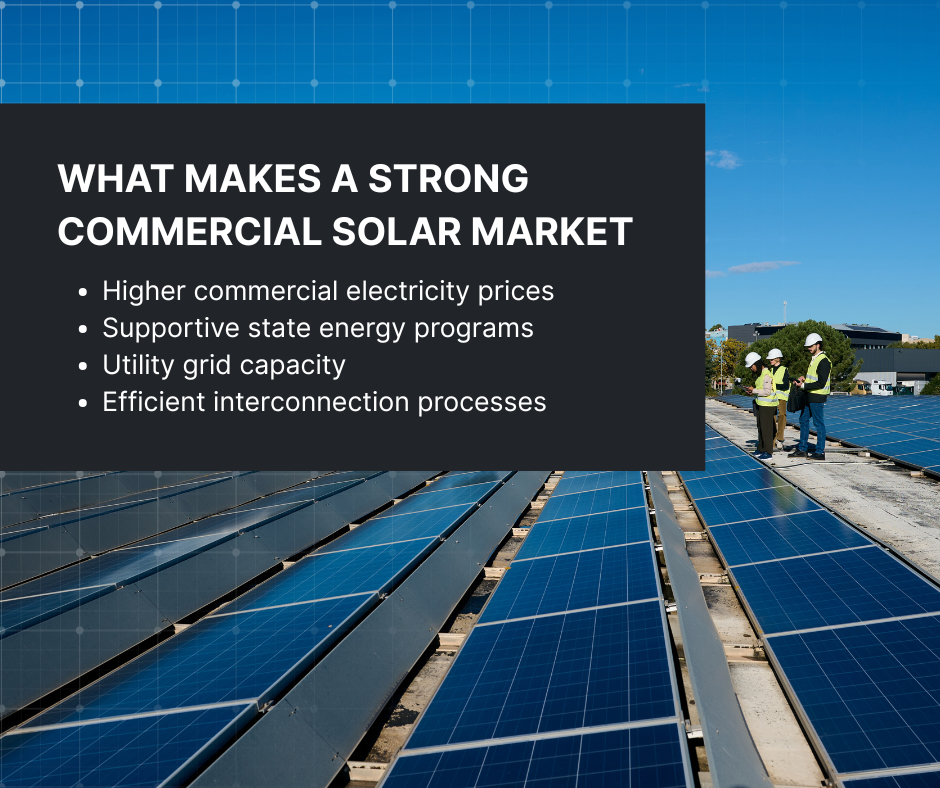
Several characteristics tend to define strong commercial solar markets.
High Retail Electricity Prices
Higher utility rates improve the financial impact of solar programs because locally generated electricity can offset more expensive grid power.
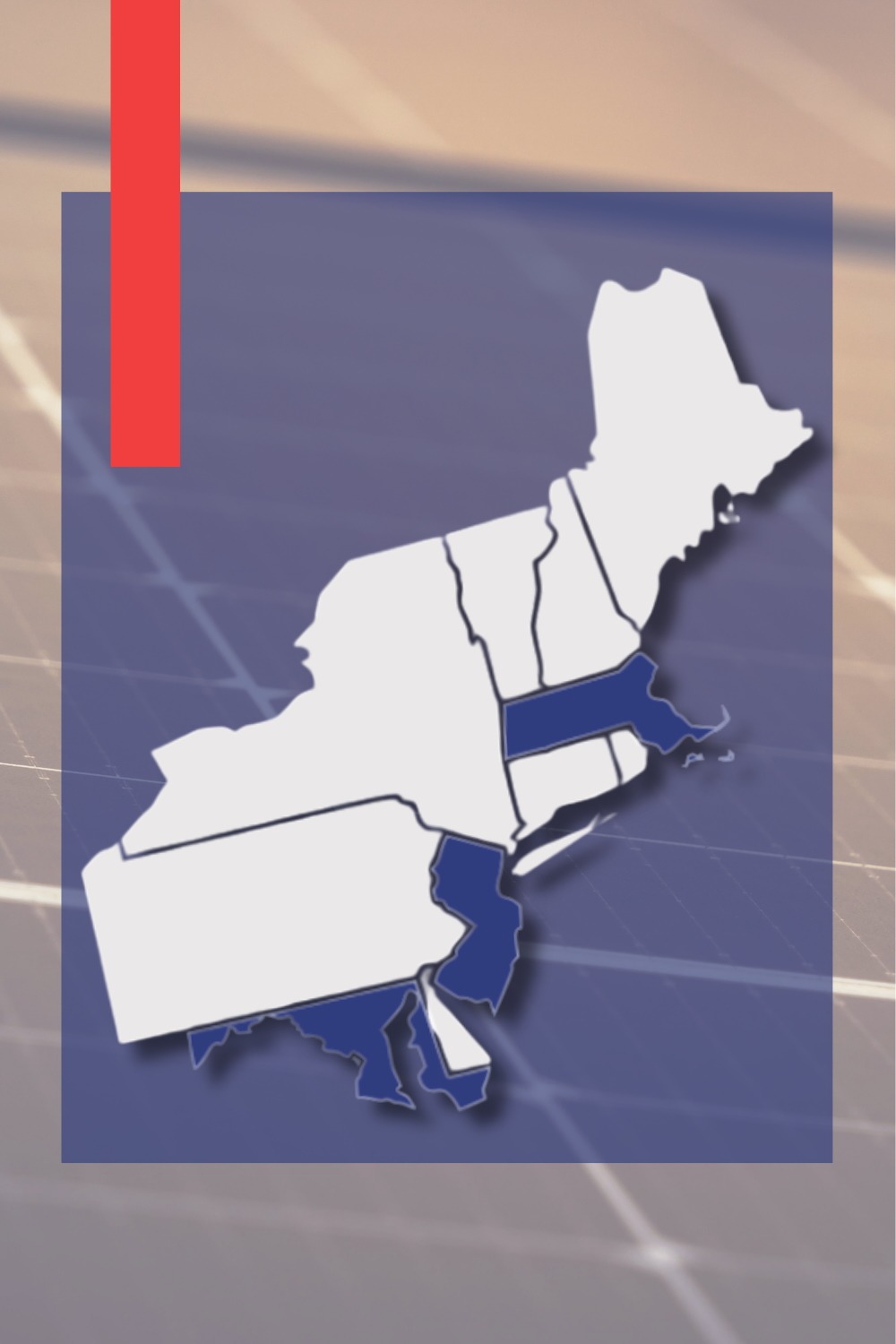
States with relatively high commercial electricity prices, such as California, New York, Massachusetts, and New Jersey, have historically seen strong adoption of distributed solar.
Supportive Distributed Generation Policies
Regulatory frameworks play an important role in enabling commercial solar programs.
Policies such as community solar programs, net energy metering, and distributed generation incentives allow solar systems to export electricity to the grid while ensuring the energy has a predictable market.
States such as Illinois, New York, and Maryland have implemented policies that support distributed solar participation across commercial properties.
Grid Capacity and Interconnection Availability
Solar systems must be interconnected with local utility infrastructure. In some markets, grid constraints can limit the ability to deploy new distributed energy systems.
Utilities that have established clear and efficient interconnection processes tend to attract more commercial solar development.
For commercial real estate portfolios, these market dynamics often determine whether solar can support both tenant savings and property-level revenue. Developers that specialize in commercial properties typically focus on states where policy, electricity pricing, and grid infrastructure create reliable long-term project economics.
Property Types That Are Ideal for Solar
Certain commercial property types are particularly well-suited for rooftop solar deployment.
Multi-Tenant Retail Centers
Multi-tenant retail centers are among the most attractive property types for commercial solar.
These properties typically feature:
- Large contiguous rooftop space
- Stable long-term tenant occupancy
- Consistent daytime energy usage
- Portfolio ownership structures
Retail tenants, including quick-service restaurants, automotive retailers, and national chains, often operate dozens or hundreds of locations across multiple states. Energy costs therefore, multiply across an entire portfolio.
Providing lower-cost solar energy to tenants can improve tenant satisfaction while supporting broader sustainability initiatives.
For this reason, many solar developers now specialize in multi-tenant retail environments where rooftop solar can serve multiple businesses within the same property. King Energy focuses specifically on this segment of the market, helping commercial property owners monetize unused rooftop space while delivering energy savings to tenants through a streamlined billing platform.
Many national retailers are also pursuing corporate sustainability goals and energy cost stabilization across their footprints.
Industrial and Warehouse Properties
Industrial buildings also provide favorable conditions for solar systems. These facilities typically feature large rooftops with minimal shading and strong structural capacity.
In many cases, warehouses operate during daytime hours, allowing on-site solar generation to align with operational demand.
Mixed-Use Commercial Properties
Mixed-use developments that combine retail, service businesses, and office space can also benefit from distributed solar systems. These properties often have diverse energy loads that help balance solar production throughout the day.
Solar Program Structures: Community vs Behind-the-Meter
Commercial solar programs typically operate under one of two primary structures.
Community Solar (Front-of-Meter)
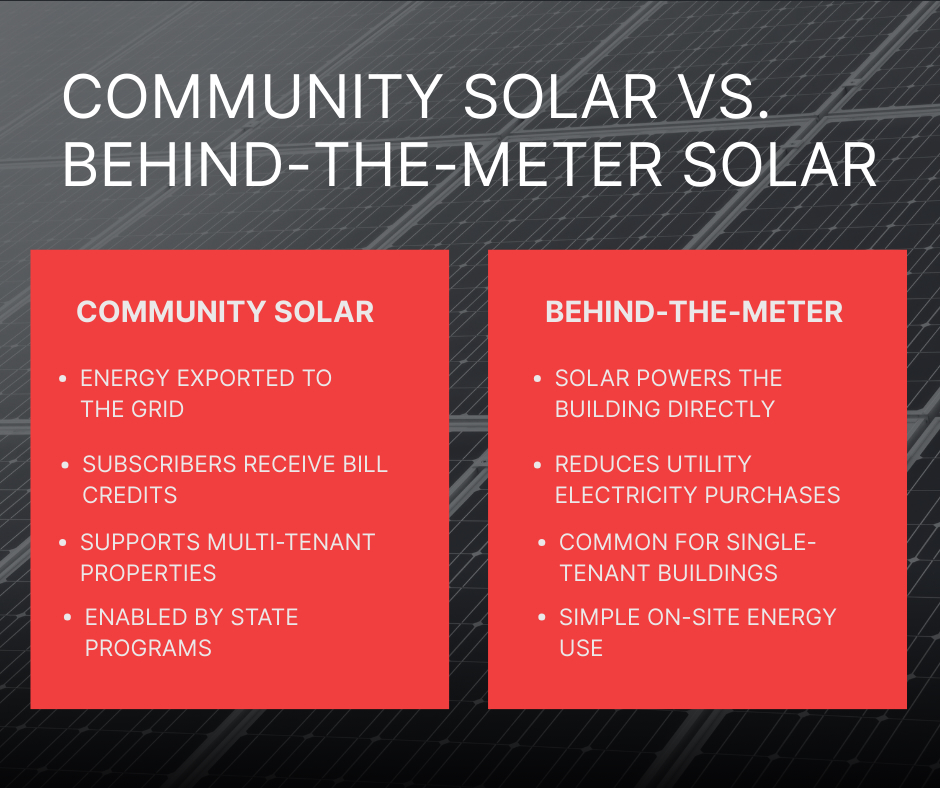
In a community solar model, the electricity generated by a solar system is exported to the utility grid. Customers, often tenants at the host property, subscribe to a portion of the solar project’s output.
Subscribers receive credits on their utility bills based on the energy produced.
This model allows solar generation from one property to benefit multiple energy customers.
Community solar programs have expanded significantly in recent years as states look for ways to increase renewable energy adoption without requiring on-site installations for every customer.
Behind-the-Meter Solar
Behind-the-meter solar systems generate electricity that is consumed directly by the building where the system is installed.
This model is common for single-tenant buildings or properties with a single primary electricity meter.
The system reduces the amount of electricity that must be purchased from the utility.
Hybrid Approaches
Some commercial solar programs combine elements of both models. A portion of the solar generation may serve on-site energy demand, while excess electricity is exported to the grid.
For multi-tenant properties, these program structures often require specialized billing and energy allocation systems to ensure each tenant receives the correct share of solar production.
Why Long-Term Solar Partnerships Matter
Commercial solar systems typically operate for 25 years or longer, which makes selecting the right development partner an important long-term decision.
Solar programs involve several layers of complexity, including engineering, permitting, utility interconnection, tenant billing, and ongoing system maintenance.
For commercial property owners, working with a partner that manages the full lifecycle of the system can simplify implementation and reduce operational burden.
King Energy focuses specifically on multi-tenant commercial properties, installing and operating solar systems while paying rent to property owners for the use of rooftop space.
Through our OneBill™ software platform, King Energy manages tenant billing and energy allocation across multi-tenant properties. This approach allows property owners to participate in solar programs without adding operational complexity, while tenants benefit from predictable energy pricing.
The Long-Term Outlook for Commercial Solar
As federal incentives evolve, commercial solar is increasingly driven by market fundamentals such as electricity prices, supportive state programs, and the growing need for predictable energy costs across commercial portfolios.
For many commercial real estate owners, particularly those operating multi-tenant retail properties, rooftop solar offers a practical way to turn unused space into long-term property income while helping tenants reduce energy costs.
King Energy focuses specifically on multi-tenant commercial properties, installing and operating solar systems while paying rent to property owners and providing tenants with lower-cost energy.
To learn more about how solar can work within a commercial real estate portfolio, contact the King Energy team.
FAQ: Commercial Solar in the Post-ITC Era
Does commercial solar still make financial sense without the ITC?
Yes. While the Investment Tax Credit helped accelerate adoption, solar economics are increasingly supported by declining equipment costs, rising electricity prices, and distributed energy programs.
What types of commercial properties work best for solar?
Properties with large rooftops and stable occupancy tend to perform best. Multi-tenant retail centers, industrial buildings, and mixed-use commercial properties are common candidates.
How long do commercial solar systems last?
Most commercial solar systems are designed to operate for 25 to 30 years with ongoing maintenance and monitoring.
Do property owners need to invest capital to install solar?
In many solar partnership models, the solar provider installs and operates the system. Property owners provide rooftop space and receive financial benefits such as rental payments.
How long does it take to install a commercial solar system?
Project timelines vary depending on permitting, utility interconnection approvals, and program participation. In many cases, a commercial solar project takes 6 to 12 months from agreement to operation.